
The main goal of an elimination diet is to discover which foods might be causing your symptoms, especially digestive symptoms. Typically, it starts with avoiding foods that many other people are sensitive to. These common foods are things like seafood, nuts, dairy, eggs, wheat, corn, soy, peanuts and tree nuts. But there are different elimination diets which target different foods. The list of “problem foods” varies even between very reputable medical clinics and research centers.
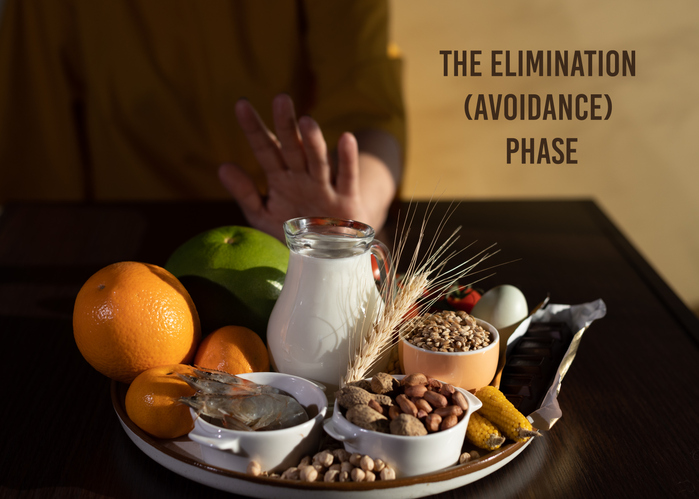
Here is a general protocol:
Step 1. Eliminate several suspect items from your diet for about 2-4 weeks. Usually, digestive symptoms resolve pretty quickly, other symptoms can take more time. If symptoms don’t resolve, eliminate another food category or two. Just continue eliminating food categories until your symptoms disappear. Usually, it takes eliminating a number of things.
Step 2. Once you no longer have symptoms, slowly add back, one food at a time. This routinely takes a few days or a week for each item, but sometimes the reaction to the food is immediate. If all goes obviously and clearly, you know you must avoid this food. Then continue with the other foods one at a time. Depending on how many foods you test, this can take a few weeks. Sometimes this protocol is complicated by the fact that you are sensitive to more than one food.
The entire process typically takes a couple of months. But sometimes a person gets lucky and figures out the offending food quickly. However, some people actually never get out of Step 1. They keep eliminating more and more foods yet the acid reflux or stomach cramping or bowel issues never go away. Here’s a real clinical example:
Client A: Female in her 40s
Decades ago, I had an acupuncture client who had the following experience with an elimination diet. When she came to me in utter frustration, she was only eating 3 foods and reported to me that they were the blandest foods ever. Her MDs could find nothing wrong with her.
Her nonstop discomfort had her so stressed, she kept repeating to me, “I’m only eating three of the blandest foods imaginable.” I finally got her to tell me exactly what bland foods she was eating. They were bananas, potatoes and chicken. These 3 foods are warming and I thought it most likely she was So-yang (Lesser Yang) constitution. Although, she was not hopeful, she decided that she would try doing the Korean Sasang diagnosis. In the meantime, I told her to immediately switch to melons, pork and rice.
Twenty-four hours later she called to tell me that her digestion was calm, easy, and pain free for the first time ever. This matched what her Bazi chart indicated and I happily informed her that she could eat many more foods than just these three. The main issue for her and others of this constitution is that the So-yang type is not the most common constitution. Most people (about 70% of the population) do very well eating warming foods like chicken, potatoes and bananas but she was definitely not one of them.
She then changed her diet to eat foods that were right for her and to avoid the ones that were not and decades later she is still eating according to her Sasang Constitution and has no digestive issues whatsoever. Like other So-yang, her digestion was irritated by the most common warming diet and once she eliminated warming foods and added some cooling foods, she was absolutely fine.
Client B: Male in his 20s
Then there was the young man who had avoided cow dairy his entire life, since as a baby eating cow dairy would always cause diarrhea. This was not the case when he ate goat/sheep dairy, (which targets the Earth, not Metal). The only problem is that the two organs, related to the element Metal that cow dairy impacts, were the colon and the lung. While the colon seemed to be better when he avoided cow dairy, the lung definitely was not. His family moved to a cold climate when he was two and he started having asthma almost daily and nasal allergies to practically everything. He was still suffering in his teens and was tested for antibodies to a number of antigens. The one thing that he clearly reacted to was casein, a milk protein. However, goat/sheep dairy has casein too, even though he had never had diarrhea from them, even as a baby.
When his Sasang analysis was done, his Bazi contained no Metal element and no Fire element at all. This indicated that he actually needed to eat cow dairy and other lung-building food. The problem with cow dairy was obvious from his chart. His lung was deficient and very cold. His constitution was Tae-eum (Greater Yin). Tae-eum must eat lung-building food like cow dairy.
He started changing his diet by adding lots of warming teas, spices every day, and he ate lamb at least twice a week. Once his system was warmer, he added beef and cow dairy to strengthen the lung. He completely stopped having asthma and his allergies slowly cleared. Here’s the really crazy thing, that the biochemist in me didn’t expect, his antigen tests no longer showed a reaction to casein.
From an elimination diet standpoint stopping dairy, ended the diarrhea. So obviously, from a Western perspective, he needed to avoid dairy. But in all Asian medicine it is seen that balanced organs have no symptoms. If someone has symptoms coming from an organ, that organ is either excess or deficient. The Qi Balance Sasang Constitutional Analysis clearly indicated what needed to be done for a young man who had suffered from eliminating the foods that he needed. Once he warmed his internal organs. he could process the lung-building food he needed and all his symptoms completely resolved.
Summary: For many people, an elimination diet can quickly identify foods that don’t suit them. But if you have to eliminate many foods or if some of your symptoms persist, or new (but related) symptoms appear, using an elimination diet may not work at all. Determining exactly the foods that you need to eat and the ones you need to avoid can be life changing. Learning exactly how to approach the problem in a way that suits you precisely can be essential and Korean Sasang Constitutional Medicine could make all the difference.




Leave A Comment